Table of Contents
ToggleIf you’ve spent any time reading home improvement guides or talking to contractors, you’ve probably heard the term “vented” thrown around, vented attics, vented crawl spaces, vented soffits. It’s one of those words that sounds simple but often leaves homeowners confused about what it actually means and why it matters. Simply put, vented refers to intentionally designed openings that allow air to flow through specific parts of your home to regulate moisture, temperature, and air pressure. Understanding venting isn’t just technical jargon: it’s fundamental to preventing costly damage like rot, mold, and structural deterioration. Whether you’re tackling a roof project, finishing a basement, or just trying to figure out what those little holes in your soffits do, this guide will walk you through the essentials of vented systems in your home.
Key Takeaways
- Vented systems use intentional openings to allow air flow through attics, crawl spaces, and soffits, preventing moisture buildup, mold, rot, and structural damage to your home.
- Proper ventilation requires air to enter low through soffit vents and exit high through ridge or gable vents, with building codes typically requiring 1 square foot of net free ventilation per 150 square feet of attic or crawl space.
- Regular maintenance of vented systems—checking for blockages, clearing debris, and inspecting for condensation or water stains twice yearly—can prevent costly structural repairs and extend your home’s lifespan.
- Signs of failing ventation include condensation on rafters, frost on roof sheathing, standing water in crawl spaces, and musty odors, all indicating moisture is not being properly controlled.
- Never block soffit vents with insulation or debris, and use rafter baffles when adding attic insulation to maintain the critical air gap between insulation and the roof deck.
Understanding Ventilation and Why It Matters
At its core, ventilation is about movement. Air needs to flow through enclosed spaces to carry away moisture and prevent heat buildup. When you vent a space, you’re deliberately creating pathways, usually with vents, louvers, or strategically placed openings, that allow outside air to enter and inside air to exit.
Moisture is the real enemy here. When warm, humid air gets trapped in an unvented attic, crawl space, or wall cavity, it condenses on cool surfaces like insulation, framing, and sheathing. Over months or years, that moisture feeds mold, rots lumber, and weakens the structural integrity of your home. Building codes in most jurisdictions require ventilation in attics and crawl spaces specifically to combat this.
Temperature control matters too. In summer, a vented attic allows hot air to escape, which reduces the load on your air conditioning and keeps your home cooler. In winter, venting prevents ice dams by maintaining a consistent, cold attic temperature. The professionals at Fine Homebuilding offer detailed guidance on modern venting strategies for different roof slopes and climate zones, worth reviewing if you’re planning structural work.
Ventilation also balances air pressure. Unvented spaces can develop negative pressure, which pulls moist interior air into wall cavities, the opposite of what you want. Properly designed vented systems maintain equilibrium and keep moisture where it belongs: outside.
Common Vented Applications in Your Home
Vented Attics and Roof Systems
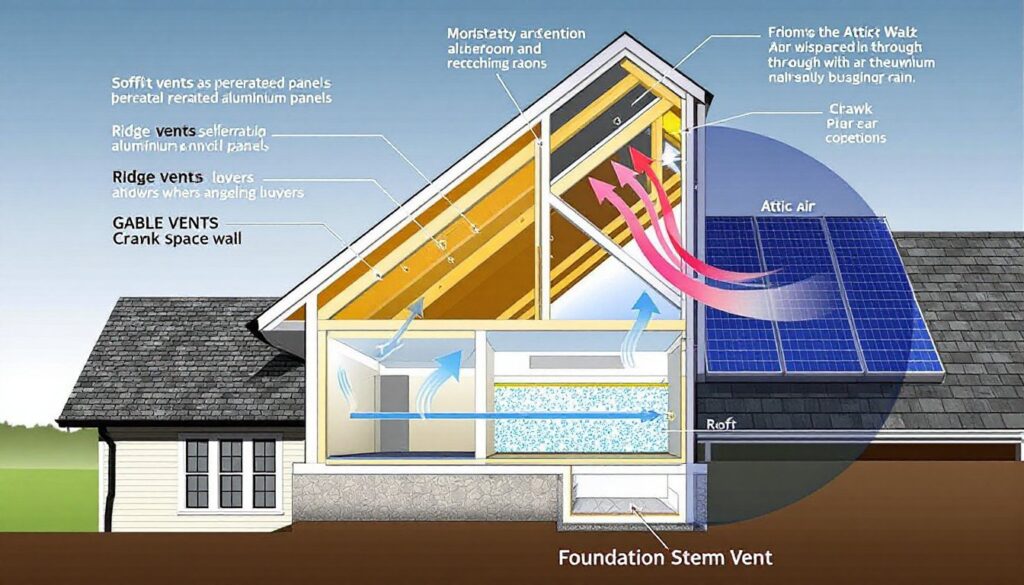
Vented attics are the most common type you’ll encounter. The goal is simple: allow outside air to flow under the roof deck, through the attic space, and back out. This typically happens through soffit vents (those perforated panels under the eaves) and ridge vents or gable vents (openings at the peak or sides of the roof).
The airflow path matters. Air should enter low (soffit vents) and exit high (ridge or gable vents), using the natural buoyancy of warm air to create continuous circulation. If you only have gable vents and no soffits, or vice versa, you won’t get effective cross-ventilation. Building codes generally require a minimum of 1 square foot of net free ventilation per 150 square feet of attic space in most climates. This is nominal, the actual opening is smaller after accounting for louvers and screening.
When installing or repairing vented roofs, never block soffit vents with insulation or debris. That defeats the entire system. If you’re adding insulation to your attic, use rafter vents or baffles to maintain an air gap between the insulation and the roof deck.
Vented Crawl Spaces and Foundations
Crawl spaces are shallow, unfinished areas under your home where pipes, ducts, and occasionally cables run. Venting them prevents moisture from accumulating in that enclosed zone, which would otherwise damage rim joists, band board lumber, and anything stored below.
Vented crawl spaces have foundation vents (perforated openings in the concrete or stem wall) placed so air can flow across the entire space. The standard is similar to attics: roughly 1 square foot of net free ventilation per 150 square feet of crawl space area. Unlike attics, you typically rely on exterior vents and ground-level breeze rather than stack effect, so adequate spacing and unobstructed pathways are critical.
One caveat: in very humid climates or homes with persistent moisture issues, some builders now recommend encapsulated or conditioned crawl spaces rather than vented ones. This is a departure from traditional code but gaining traction. If you’re dealing with a consistently wet crawl space, that’s a situation worth consulting a professional about rather than just adding more vents.
How to Properly Install and Maintain Vented Systems
Installing or upgrading vents requires attention to detail and an understanding of your climate zone. Start by calculating your net free ventilation requirement. Multiply your attic or crawl space square footage by the ratio (typically 1:150 or 1:300 depending on local code and whether you have vapor barriers). Then measure the actual vent openings, manufacturers list “net free area” on packaging, which accounts for screening and louvers.
For soffit vents, ensure they’re not clogged or blocked by insulation from the inside. If you’re installing new ones in an existing soffit, you’ll need to drill or cut holes and screw in the vent panels. Use exterior-grade caulk or sealant where they meet the soffit to prevent water intrusion. Avoid over-tightening fasteners: that can deform the vent and reduce airflow.
Ridge vents require removing a portion of roofing at the peak, installing the vent panel along the ridge board, and re-shingling over it. This is more involved than soffit work and may warrant a contractor if you’re not comfortable on a roof. Gable vents are simpler, they mount directly into a cut opening in the gable end wall and can often be added without removing existing siding if you’re careful with sizing.
For crawl space vents, foundation vents install into concrete or stem wall openings. If you’re retrofitting, you may need to cut the opening or use insert-style vents. Ensure nothing blocks the pathway inside, move stored items, clear debris, and verify that the opposite wall or adjacent vents allow cross-flow.
Maintenance is straightforward but easy to overlook. Twice a year, check that vents aren’t clogged with leaves, bird nests, or ice. In spring and fall, clear soffit vents from inside the attic and make sure ridge vents aren’t covered by moss or debris. Use a shop vacuum with a long hose or a soft brush to avoid damaging screening.
Signs Your Vented System Needs Attention
A failing vented system usually announces itself through moisture and temperature problems. Look up in your attic on a humid or rainy day. If you see condensation on rafters, frost on roof sheathing in winter, or active water stains, your ventilation isn’t working. Similarly, if your attic feels as warm as the outdoors in summer even though vents being present, air isn’t moving.
In crawl spaces, standing water, wet insulation, or a musty smell all point to inadequate venting. Mold on rim joists or soft, crumbly wood are late-stage signs, by then, you’re looking at structural repair, not just vent cleaning.
Blocked vents are the most common culprit. Insulation, bird nests, or ice dams can completely seal soffits or ridge vents. Improper installation, like ridge vents installed without enough free-area opening or soffit vents painted shut, is another frequent issue. Less common but serious: inadequate vent size to match your space, usually from a poorly planned addition or miscalculated attic square footage.
Damaged vent panels, rusted or cracked louvers, and missing screening also reduce effectiveness. If you spot torn or rusted vents, they should be replaced. Instructables and similar platforms host step-by-step guides for many common vent replacements if you want to DIY, though some may warrant a quick contractor call if roof access is steep or risky.
Don’t assume that a small attic leak or slight mustiness is normal. Venting is designed to prevent exactly these problems, and catching issues early saves thousands in repair costs down the line.
Conclusion
Vented systems aren’t glamorous, but they’re one of the most important invisible defenses in your home. Whether it’s soffit vents drawing fresh air into your attic or foundation vents keeping crawl spaces dry, proper ventilation prevents moisture damage, regulates temperature, and extends the life of your structure. The good news: understanding venting is straightforward, and maintaining it requires only occasional attention. If you’re unsure about your home’s ventilation setup or suspect problems, have a qualified inspector take a look, it’s far cheaper than replacing rotted joists or battling mold later on.