Table of Contents
ToggleA senior bathroom remodel isn’t just about updating fixtures or refreshing the décor, it’s about creating a space where aging in place is safe, comfortable, and independent. Falls are the leading cause of injury-related death among older adults, and many of those accidents happen in the bathroom. The good news is that thoughtful design changes, from grab bars to slip-resistant flooring, can dramatically reduce risks while maintaining dignity and style. Whether you’re planning an elderly bathroom remodel for yourself or a loved one, this guide walks you through the essential safety features and accessibility upgrades that make a real difference in daily life.
Key Takeaways
- A senior bathroom remodel prioritizes fall prevention and safety through grab bars, slip-resistant flooring, and accessible fixtures, addressing the leading cause of injury-related deaths among older adults.
- Grab bars must be mounted securely to wall studs with stainless steel bolts and positioned at wrist height (33-36 inches) to safely support up to 300 pounds of force.
- Slip-resistant flooring rated R9 or R10 on the Pendulum Test Value scale, combined with proper mat placement, dramatically reduces bathroom fall risks for seniors.
- Accessibility upgrades like walk-in tubs, comfort-height toilets (17-19 inches), and lever-style faucets make daily bathroom tasks manageable while maintaining independence.
- A basic senior bathroom remodel typically costs $4,000 to $8,000, but planning ahead and installing backing plates for future grab bars saves significant money on retrofits.
- Planning should include assessing current pain points, measuring doorway clearance (minimum 36 inches for mobility devices), and checking local building codes and permitting requirements.
Why Senior Bathroom Safety Matters
The bathroom is where vulnerability and moisture intersect, a dangerous combination for seniors. Wet floors, slippery surfaces, and inadequate support create hazards that a younger person might navigate without thinking but that can be catastrophic for someone with balance issues, arthritis, or reduced mobility.
According to data from the CDC, falls cost the U.S. healthcare system billions annually, and many occur in bathrooms where older adults live alone or with minimal supervision. A senior bathroom remodel addresses these risks head-on. It’s not about removing independence: it’s about removing obstacles so that showering, using the toilet, and washing up remain manageable without constant assistance.
Thinking about accessibility early, during renovation planning, is far cheaper and less disruptive than retrofitting a bathroom months or years later. You’ll also find that many accessibility features benefit the entire household, not just seniors. Anti-slip mats help parents with small children, grab bars assist anyone recovering from injury, and wider doorways make moving furniture simpler.
Essential Safety Features for Senior Bathrooms
Grab Bars and Handrails
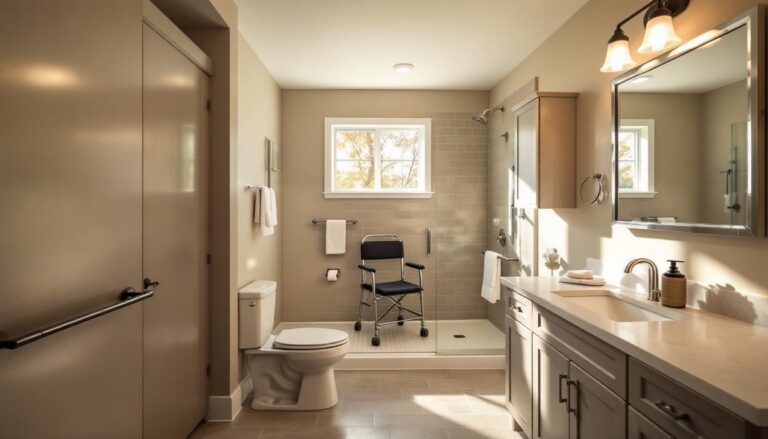
Grab bars aren’t optional in a senior bathroom, they’re structural safety equipment. Install vertical grab bars (12 to 18 inches long) beside the toilet and diagonal or horizontal bars (24 to 36 inches) in the shower or tub enclosure. Position them at wrist height, roughly 33 to 36 inches above the floor, so users can grip with a natural arm angle.
Mounting matters: bars must fasten to studs (the vertical wooden or steel frame members behind drywall) using stainless steel bolts and washers, not just surface fasteners. A single grab bar holding a falling adult’s full weight can exceed 300 pounds of force. Drywall alone won’t hold. If studs don’t align with where you need the bar, install a backing plate, a horizontal board secured between studs, then mount the bar to that.
Stainless steel bars resist corrosion better than chrome-plated versions in a moisture-heavy bathroom. Diameter matters too: a 1.25-inch to 1.5-inch diameter bar is comfortable to grip for most hands, whether large or arthritic.
Slip-Resistant Flooring
Wet tile is a nightmare for senior bathroom safety. The solution is flooring with grip. Ceramic or porcelain tile with a textured or matte finish (as opposed to high-gloss) provides traction. Look for tiles rated R9 or R10 on the Pendulum Test Value (PTV) scale, which measures slip resistance. Smaller grout lines trap less water and feel safer underfoot than large-format tiles.
Alternatively, luxury vinyl plank (LVP) with anti-slip backing is easier to install, warmer to the touch, and forgiving if dropped items break. Some LVP mimics natural stone or wood while offering Class A fire ratings and moisture resistance. Ensure the underlayment (the layer beneath flooring) is designed for wet areas: standard plywood swells when wet.
Mat placement is equally critical. A removable bathroom mat with suction cups or a rubber backing prevents slipping but shouldn’t bunch up and create a trip hazard. Position it where water pools, not in the main traffic path. Some seniors benefit from a low-profile mat (under 0.5 inches thick) just inside the shower threshold rather than a full bathroom mat.
Accessibility Upgrades That Make a Difference
Beyond grab bars and flooring, several upgrades dramatically improve how a senior uses the bathroom daily.
Walk-in tubs or showers eliminate the high step-over lip of traditional tubs. A walk-in tub has a low door (typically 10 to 12 inches) that seals when closed, allowing a senior to sit comfortably inside before water fills. Walk-in showers with a curb-free threshold are even simpler, the floor slopes gently to a drain, and a shower chair provides seating. Comparing these options, built-in tubs require plumbing rework and take time to fill, while freestanding bathtubs and their installation trade offs show that freestanding models offer flexibility for seniors who want easier exit but require more floor space.
Height-adjustable or comfort-height toilets sit 17 to 19 inches high (versus the standard 15 inches), making it easier for seniors to stand. Pair this with a raised toilet seat with grab handles as a temporary, budget-friendly alternative if a full toilet replacement isn’t feasible.
Lever-style faucets beat knobs for arthritic hands. A single-handle lever requires far less grip strength and dexterity than two separate handles. Install faucets with single-temperature controls or thermostatic mixing valves to prevent accidental scalding, seniors often have reduced sensation and slower reflexes.
Adequate lighting is overlooked but essential. Install bright, even overhead lighting (no dark corners) and consider motion-sensor night lights so seniors moving to the bathroom in darkness don’t trip. A lighted mirror helps with grooming and adds safety.
Storage at reachable heights prevents seniors from overextending or bending awkwardly. Wall-mounted cabinets and shelves at eye level or slightly below beat under-sink storage that requires bending. If you’re using resources like Houzz for bathroom design inspiration, you’ll see many examples of accessible storage in modern senior-friendly layouts.
Flooring material choices extend beyond slip resistance. Ensure the floor is level and even, raised thresholds, uneven grout lines, or sagging subfloors trip seniors. If replacing tile or vinyl, check that the new flooring height doesn’t create a dangerous lip where it meets adjacent rooms.
Planning Your Senior Bathroom Remodel
Start by assessing the current space and identifying pain points. Walk through the bathroom with the senior (or the person using it regularly) and note where they struggle: getting in and out of the tub, reaching towels, maneuvering in tight spaces, or navigating wet floors.
Measure doorway width, standard doors are 32 inches wide: a wheelchair or walker needs at least 36 inches clear opening. If widening the doorway is necessary, that may require adjusting the frame and, in some cases, moving plumbing or electrical rough-in. This is where a contractor’s input becomes valuable: some changes require building permits and licensed professionals.
Budget realistically. A basic senior bathroom remodel, new flooring, grab bars, toilet replacement, lighting, and paint, might run $4,000 to $8,000 depending on your region and material choices. Walk-in tubs, significant plumbing changes, or structural work (like removing a tub entirely) can push costs higher. Use tools like ImproveNet for cost estimates and contractor referrals to get quotes and compare options.
Plan the layout for clear, straight paths. Avoid L-shaped or cramped bathrooms where a senior must navigate tight corners. Ensure the toilet, sink, and bathing area form a logical sequence without requiring backing up or tight turns.
Consider future needs. Installing grab bar backing plates during the remodel (even if you don’t attach bars immediately) is far cheaper than cutting into walls later. The same applies to electrical: add an outlet or two for a heated towel rack, a night light, or a hair dryer, anticipating that a senior’s needs may evolve.
Permits vary by jurisdiction. Some areas require permits for bathroom remodels if they involve structural changes, electrical upgrades, or plumbing work. Check local building codes, the IRC (International Residential Code) sets accessibility standards, but your city or county may have stricter rules. A general contractor or architect can confirm requirements and handle permitting, which protects you if issues arise.
Conclusion
A senior bathroom remodel combines practical safety with thoughtful design, allowing aging in place without sacrificing comfort or dignity. From grab bars and slip-resistant flooring to accessible fixtures and smart lighting, each element serves a purpose. Start by identifying the biggest hazards in your current bathroom, budget for quality materials and professional help where needed, and prioritize changes that address real pain points. The result is a bathroom that works harder for the people using it, today and for years to come.