Table of Contents
ToggleFinding the right wall decor for your home doesn’t mean scrolling endlessly through generic online catalogs. Local shops, galleries, and DIY projects offer something e-commerce can’t: the chance to see, touch, and talk to people who actually know their stuff. Whether you’re hunting for unique art, frameable prints, or planning a weekend project to transform a bare wall, discovering wall decor near you puts control back in your hands. This guide walks you through sourcing locally, understanding your options, tackling DIY installations, and keeping costs down without sacrificing quality.
Key Takeaways
- Local wall decor near you offers advantages that online shopping can’t match, including the ability to see, touch, and consult with knowledgeable staff before purchasing.
- Wall decor comes in many forms—framed prints, canvas art, mirrors, shelves, textiles, and accent walls—allowing you to choose the option that best fits your room’s function and style.
- Budget-friendly approaches like shopping thrift stores, printing digital art, and tackling DIY projects such as gallery walls or painted accents let you transform your space for under $100.
- Proper measurement and planning—including studying wall type, marking placement with painter’s tape, and applying the 57–60 inch eye-level rule—prevent installation mistakes and ensure a professional finish.
- Simple weekend DIY projects like floating shelves, gallery walls, and board-and-batten accents cost $40–200 in materials and deliver dramatic visual impact without professional labor.
How to Find Quality Wall Decor in Your Local Area
Start by checking what’s actually in your neighborhood. Independent art galleries, home improvement stores, consignment shops, and frame shops all stock wall decor, and staff who can answer real questions. Walk in, ask about local artists, seasonal sales, or custom framing. Many independent shops offer services like mat cutting, stretching canvas, or personalized framing that big-box retailers can’t match.
Local Facebook groups dedicated to home improvement or interior design often have recommendations and even for-sale posts from neighbors downsizing or redecorating. Attend local craft fairs and maker markets: they’re goldmines for affordable, one-of-a-kind wall art. Don’t overlook thrift stores and estate sales either, original oil paintings, vintage mirrors, and solid wood frames turn up regularly and cost a fraction of retail.
Shopping Local vs. Online: Pros and Cons
Local shopping advantages: You see color accuracy, texture, and scale in person before buying. Support local artists and small businesses. Same-day pickup means no shipping damage or delays. Staff can advise on installation, materials, and what works in your space.
Online advantages: Wider selection, competitive pricing, convenience, and the ability to compare across regions. When local stock is limited, online retailers deliver variety and overnight shipping. But, you can’t verify quality before arrival, and returns can be hassle-prone.
The sweet spot for many DIYers? Browse online for inspiration and exact measurements, then check local shops for quality, custom options, and immediate availability. Combine both approaches rather than choosing one exclusively.
Types of Wall Decor to Consider for Your Space
Wall decor isn’t just art. It’s a broad category that includes everything from framed prints and canvas paintings to mirrors, shelves, textiles, and architectural features. Understanding the range helps you match decor to your room’s function and style.
Framed prints and paintings are the most common choice. They hang flat, are easy to rearrange, and work in any room. Canvas art offers a more casual, gallery-like feel and needs no frame. Mirrors expand perceived space, reflect light, and double as functional décor. Wall-mounted shelves add storage and display space for books, plants, and collectibles. Textiles like woven tapestries and fabric wall hangings introduce color, pattern, and warmth. Accent walls, painted, wallpapered, or sheathed in wood paneling, transform an entire room without adding objects.
From Prints and Paintings to Shelving and Accent Walls
Prints and paintings are DIY-friendly and forgiving. They’re affordable, swappable, and help establish color schemes. Framing costs vary widely: a simple print in a basic frame runs $20–60, while custom matting and quality framing can exceed $200.
Canvas and fabric art feel modern and work well in casual spaces like bedrooms and offices. They’re lighter than framed pieces, reducing hardware needs, and resist cracking if bumped.
Mirrors serve double duty: they’re decorative and practical. Large mirrors above furniture create focal points: smaller decorative mirrors arranged in clusters add visual interest without bulk. Installation requires proper anchors since mirrors are heavy.
Shelves are ideal for displaying curated collections, family photos, or small plants. Floating shelves need secure wall anchors to handle load (typically 25–50 lbs per shelf, depending on hardware). Open shelving feels spacious: closed cabinets hide clutter.
Accent walls are a commitment, they require multiple coats, proper prep, and patience. A fresh coat of contrasting color, textured wallpaper, or shiplap creates depth and personality. Wallpaper is easier than paint for pattern but harder to remove. Wood paneling adds luxury and insulation but needs professional installation if covering large areas.
Design platforms like Domino offer modern decor inspiration and room transformations that showcase real-world applications of wall decor in contemporary homes.
DIY Wall Decor Projects You Can Complete This Weekend
Not every wall decoration needs to be purchased. Several projects are simple enough for a Saturday afternoon and cost significantly less than store-bought alternatives.
Floating shelves are an excellent starter project. Measure and mark stud locations (use a stud finder, $15–40). Install heavy-duty floating shelf brackets rated for your shelf’s weight, drilling into studs when possible. A basic shelf unit takes 2–3 hours and costs $40–100 in materials.
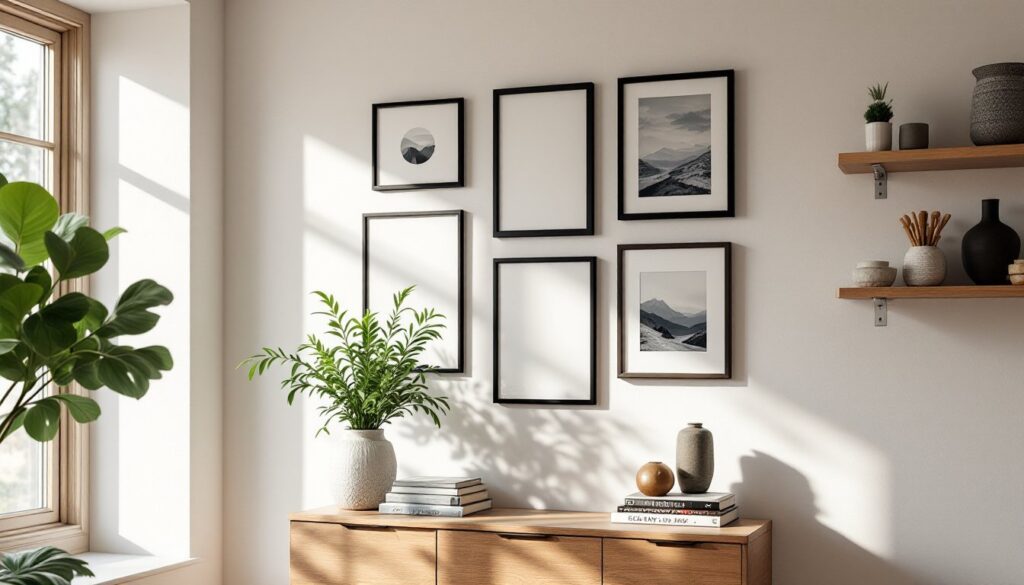
Gallery walls let you arrange prints, photos, and small frames in cohesive layouts. Lay everything out on the floor first, take a photo, then use painter’s tape and a level to mark hanging points on the wall. This project requires only nails and picture hangers but demands patience and precision.
DIY canvas art is fun and cheap. Stretch artist canvas over cheap wood frames (available at craft stores), paint or collage your design, and hang with simple D-rings. Total cost: $10–20 per piece. Addicted 2 Decorating has step-by-step DIY decor tutorials for budget-friendly makeovers and painting projects.
Shiplap or board-and-batten accent walls add texture and farmhouse charm. Install 1×6 or 1×8 pine boards horizontally or vertically over existing drywall using a brad nailer and construction adhesive. Stagger seams, prime, and paint. Expect 6–8 hours and $100–200 in materials for a 10×12 room.
Painted murals or stenciled patterns turn blank walls into statement pieces. Sketch your design, use painter’s tape for clean edges, and apply quality interior paint (primer-in-one formulas work for accent colors). Two to three days for a medium mural: supplies cost $30–70.
All of these projects require basic tools: a drill, level, stud finder, measuring tape, and paint supplies. Renting specialized tools is cheap if you don’t own them.
Budget-Friendly Wall Decor Solutions for Every Homeowner
Decorating doesn’t require emptying your wallet. Smart shopping, creative sourcing, and DIY work stretch every dollar.
Thrift and estate sales are treasure troves for frames, artwork, mirrors, and wood pieces at 50–80% below retail. Visit regularly: inventory changes weekly. Frames especially are dirt cheap and easily updated with fresh paint or new glass.
Printable art costs nearly nothing. Download designs from sites offering free or low-cost digital art, print at home or a local print shop ($2–8 per print), and frame cheaply. Many DIYers print 20+ pieces for under $50 total.
Upcycled and repurposed items work as wall decor. Old wooden doors, vintage windows, ladder shelves, and reclaimed barnwood hang beautifully and tell a story. Check local buy-sell groups for free or cheap finds.
Paint and accent walls offer the biggest visual impact per dollar. A gallon of quality interior paint covers about 350 sq. ft. and costs $25–50. Painting an accent wall takes one afternoon and transforms the space instantly.
Seasonal swaps maximize limited pieces. Rotate décor by season, lighter, airier pieces in summer: warm tones and textures in fall. One item serving multiple purposes stretches your budget year-round.
Clip frames and command hooks are budget alternatives to permanent installation. They’re damage-free, adjustable, and cost $3–10 per piece. Renters especially appreciate temporary solutions that don’t require drilling.
Online retailers like Houzz maintain a large, making it easy to compare price and quality across brands. Combining local thrift finds with selective online purchases balances budget constraints and design goals.
Measuring and Planning Before You Commit to Wall Decor
Most installation mistakes stem from poor planning. Take time upfront to measure, visualize, and mark before driving a single nail.
Measure your walls. Use a steel tape (25 ft minimum) to get room dimensions and identify studs, electrical outlets, windows, and doors. Sketch a rough floor plan. Note wall height, standard ceilings are 8–9 ft: vaulted ceilings change proportions entirely.
Plan scale and spacing. Large art works best on larger walls: small prints get lost on big spaces. A piece should be roughly 50–75% the width of the furniture below it. Space between hanging items should be 2–3 inches for a cohesive look.
Use the “eye level” rule. Center of artwork should hang at 57–60 inches from the floor (roughly eye level for average height). Adjust if art hangs above seating (where slightly higher is okay).
Mark before hanging. Use painter’s tape and a level to outline placement. Take a photo. Step back and view from across the room. This costs nothing and saves wall damage if you change your mind.
Consider lighting. Artwork looks best with indirect, even light. Avoid direct sunlight, which fades colors. Task lighting or picture lights enhance displays but require planning during rough-in stages.
Know your wall type. Drywall holds standard anchors for lightweight items. Plaster needs special anchors. Brick and tile require masonry bits and anchors. Studs (behind drywall) support heavier pieces like large mirrors or shelving. Use a stud finder to locate them, studs are typically 16 inches apart on center.
Proper planning prevents costly mistakes and ensures your wall decor looks intentional, balanced, and professional.