Table of Contents
ToggleBlue-grey exterior paint has become the go-to choice for homeowners seeking a sophisticated, timeless look that bridges the gap between bold color and neutral restraint. Sherwin Williams’ blue-grey palette offers options that complement modern architecture, traditional homes, and everything in between. Whether you’re planning a full exterior repaint or refreshing a single wall, selecting the right blue-grey shade, and understanding how to prep and apply it, makes the difference between a project that looks professional and one that falls flat. This guide walks you through the best Sherwin Williams blue-grey colors, how to pick the right one for your home, and the practical steps to paint like a pro.
Key Takeaways
- Sherwin Williams blue-grey exterior house paint colors offer versatile sophistication that complements any architectural style while hiding dirt better than lighter greys.
- Naval (SW 6244), Accessible Beige (SW 7036), and Urbane Blue (SW 7862) are the top three Sherwin Williams options, each suited to different design preferences and skill levels.
- Test large color samples on both shaded and unshaded walls at different times of day, as morning light, afternoon sun, and evening shadow significantly affect how blue-grey shades appear.
- Proper exterior paint preparation—including power-washing, damage repair, and primer application—is more critical to success than the paint brand itself.
- Dark blue-grey shades like Naval and Urbane Blue require quality exterior-grade primer and careful application technique to avoid visible brush marks, while Accessible Beige is more forgiving for DIY projects.
- Paint only in temperatures 50°F or above with declining heat, low wind, and no rain expected for 24 hours, and allow 2–4 weeks for full curing before power-washing.
Why Blue-Grey Is Perfect For Modern Exteriors
Blue-grey occupies a unique sweet spot in the color spectrum. It’s calm and grounding like a true grey, but carries just enough blue undertone to feel intentional and contemporary. This color family doesn’t scream for attention, it whispers sophistication, which is exactly why architects and designers reach for it on everything from farmhouses to modern minimalist builds.
The beauty of blue-grey is its versatility with other home elements. It plays well with virtually any roofing material: dark asphalt shingles, metal, or clay tiles all harmonize without competing. Trim colors, whether crisp white, warm cream, or darker charcoal, pop cleanly against a blue-grey base. Landscaping tends to look more vibrant too: greens read richer, and mulch tones ground the home visually.
From a practical standpoint, blue-grey also hides dirt and weathering better than lighter greys. It doesn’t show every pollen smudge or dust particle, which means your exterior stays looking fresh longer between cleanings. And unlike pure blue, blue-grey won’t lock you into a specific design direction if you ever want to shift your aesthetic, it’s flexible enough to adapt.
Top Sherwin Williams Blue-Grey Colors For House Exteriors
Sherwin Williams produces several excellent blue-grey options, each with distinct personality and undertones. These three stand out for exterior use because they’ve been field-tested on countless homes and remain popular year after year.
Naval (SW 6244): Classic Depth And Sophistication
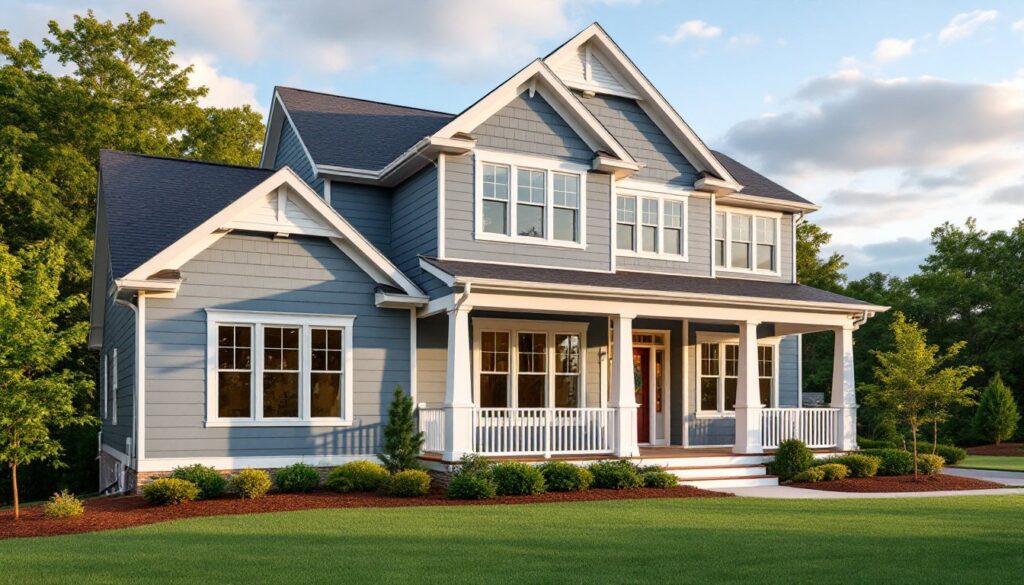
Naval is a deeper, more saturated blue-grey that reads almost like a navy at first glance, but softens into blue-grey in natural light. It’s an excellent choice if you want your exterior to make a statement without veering into bold territory. The depth works particularly well on homes with substantial architectural detail, think Craftsman, Tudor, or transitional styles, where the color can anchor the facade.
Naval pairs beautifully with white or off-white trim and pairs equally well with darker, warmer trim tones like bronze or charcoal. Many homeowners use it on siding while keeping shutters or doors a contrasting color. The main consideration: this shade shows brush marks and roller texture more readily than lighter greys, so technique matters. A quality exterior paint roller and careful, even application are non-negotiable. Expect approximately 350–400 square feet of coverage per gallon on standard wood siding with primer.
Accessible Beige (SW 7036): Soft And Versatile
Accessible Beige sits lighter on the value scale and leans warmer within the blue-grey family. It’s technically a greige (grey-beige hybrid), but its subtle blue undertone places it solidly in the blue-grey camp. This is the “plays well with others” option, it works on nearly any home style and doesn’t demand strong complementary trim colors.
Accessible Beige is forgiving to paint. It hides minor surface imperfections and roller lap marks far better than Naval, making it a smart pick for DIYers tackling their first exterior paint job. The softer tone also works well if you’re painting over an existing color, as you’ll likely need fewer coats of primer. Homeowners often use this shade when they want blue-grey’s sophistication but prefer a lighter, airier appearance. It’s also an excellent choice if your home sits in a neighborhood where bold colors aren’t the norm.
Urbane Blue (SW 7862): Bold Contemporary Appeal
Urbane Blue is the most assertively blue of the three, it’s a genuine blue-grey with confident color saturation, perfect for modern farmhouse, contemporary, or minimalist homes that benefit from chromatic presence. It’s darker than Accessible Beige but less muted than Naval, striking a confident middle ground. This shade transforms a home’s curb appeal and photographs exceptionally well.
Urbane Blue demands thoughtful trim selection. Crisp white trim creates maximum contrast and modern appeal, while softer off-whites or warm greys integrate it more subtly. It pairs nicely with natural wood tones or charcoal accents. Like Naval, Urbane Blue benefits from skilled application, watch for uneven coverage and ensure you’re using quality exterior-grade paint and primer. The color saturation means two coats of primer plus two coats of paint are typically needed for optimal results.
A practical note: if you’re considering any of these darker shades and live in a hot climate, test samples on a south-facing wall first. Darker colors absorb more heat, which can affect how the paint cures and may increase air conditioning demands slightly.
How To Choose The Right Shade For Your Home
Selecting among blue-greys comes down to three factors: your home’s architectural style, your landscape, and how much color boldness you want. Start by grabbing Sherwin Williams color sample cards from a local distributor, buying sample quarts to paint large test patches on your actual home’s exterior is worth every dollar. Paint a 3×3-foot section of each candidate color on a shaded wall and an unshaded wall, then observe them at different times of day. Morning light, afternoon sun, and evening shadow all shift how colors read.
Your roof and existing trim colors matter enormously. Pull samples of your roof shingles and any existing trim into the lighting of your home’s exterior and compare them directly to paint samples. Metallics and undertones behave differently in sunlight than they appear indoors. Also consider whether surrounding homes lean toward warm or cool tones, you don’t need to match the neighborhood, but abrupt color shifts can feel jarring.
Architecture guides your choice too. Homes with busy roof lines, dormers, and varied facade planes work well with deeper, more saturated blues like Naval or Urbane Blue, where color definition enhances detail. Simpler, more modern designs often benefit from softer Accessible Beige, which emphasizes clean lines rather than color drama.
References like interior design inspiration sites and paint color guides from design professionals can provide context and examples, but remember that your home’s unique lighting, materials, and surroundings will always produce different results than a photo.
Preparing And Painting Your Exterior With Sherwin Williams
Exterior painting success hinges on prep work, not paint brand. Even premium Sherwin Williams paint won’t hide poor surface preparation. Start 2–3 weeks before you plan to paint by power-washing the siding, trim, and any previously painted surfaces. Use a pressure washer at 1,500–2,000 PSI to remove dirt, mildew, and loose paint without gouging wood. Let surfaces dry completely, ideally for at least 48 hours in good weather.
Inspect for damage next. Fill nail holes and small cracks with exterior-grade caulk, sand rough spots smooth, and scrape off any loose or peeling paint. If you’re painting over a significantly darker color or glossy finish, a coat of quality exterior primer is essential, Sherwin Williams ProClassic or Duration Home primers are solid choices. Dark blue-grey shades like Naval and Urbane Blue almost always need primer for proper coverage.
Paint application matters. Use a quality exterior paint roller with a 3/8-inch or 1/2-inch nap for stucco or textured surfaces: smoother siding takes a 1/4-inch nap. Invest in a sturdy extension pole and ladder, and consider renting a paint sprayer if covering more than 1,000 square feet, rollers work fine, but sprayers save time and deliver flawlessly even coats. Apply thin, even coats rather than one thick coat. Two coats of Sherwin Williams exterior paint typically provide full coverage and maximum durability.
Weather conditions matter. Paint only when temperatures are 50°F or above and declining, with low wind (above 15 mph, stay indoors), and no rain expected for 24 hours. Early morning or late afternoon application avoids direct sun beating on your work. Wear safety glasses, work gloves, and a dust mask when sanding or scraping. If you’re working on a ladder above 6 feet, use a fall-arrest harness or hire help, painting shouldn’t put you in the hospital.
Expect the job to take longer than you think. A typical 2-story exterior takes 3–5 days with one person working full days. Budget extra time for moving landscaping, protecting windows and doors with tape, and letting paint cure properly between coats. Sherwin Williams exterior paints typically cure fully in 2–4 weeks, depending on humidity and temperature, so hold off on power-washing or aggressive cleaning until full cure. Resources like expert DIY guidance can walk you through specific techniques if you hit snags.